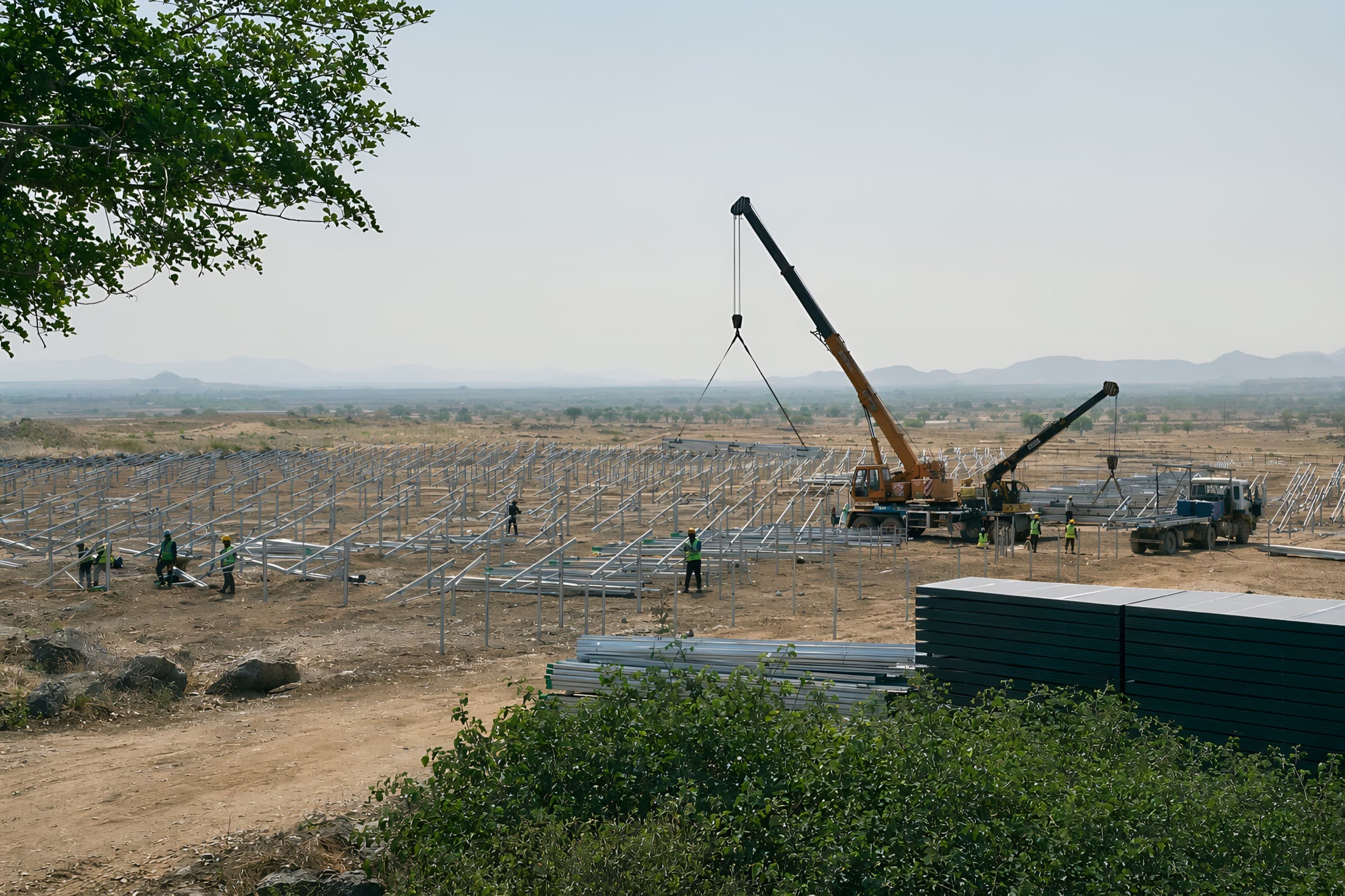
Scheduling a 200 MW IPP portfolio across DAM & RTM
An independent power producer needed to place generation block-by-block across the day-ahead and real-time markets. How forecast-driven bidding turned a daily judgement call into a repeatable schedule, and kept deviation exposure in check.
On this page · 7 sections
The Producer#
An independent power producer operating a renewable portfolio of roughly 200 MW, with meaningful merchant exposure: capacity beyond contracted volumes that had to be sold into the power exchanges. Every day, the desk faced the same decision — how much energy to offer into which market, at what price, in which blocks.
That decision is not one decision. The day-ahead market clears 96 fifteen-minute blocks in a single morning auction; the real-time market runs 48 sessions around the clock, each with its own gate closure. A 200 MW portfolio selling merchant power is making hundreds of separate pricing and quantity calls a day — and until now, the desk was making them from experience, a spreadsheet, and yesterday's clearing prices.
The Block-by-Block Problem#
In the DAM's double-sided auction, a bid is a price-quantity pair per 15-minute block, submitted before noon for delivery across the whole of the following day. Getting a block right requires two forecasts at once: what the portfolio will actually generate in that block, and what the market will clear at. Neither is knowable with certainty a day ahead — solar output depends on tomorrow's cloud cover, and clearing prices depend on demand, coal positions, and what every other participant is doing.
The naive answer is a flat bid: offer the day's expected generation, spread evenly, at a safe price. Flat bids are systematically wrong in both dimensions. They offer energy into midday blocks that clear near the floor, where solar floods the supply curve, at the same terms as the evening blocks that clear multiples higher. And they ignore the generation shape entirely: a solar-heavy portfolio has nothing to deliver into the blocks a flat schedule promises overnight. Every mismatch between what was scheduled and what was delivered becomes a deviation, settled against the portfolio at that block's rates.
Forecasts Into Schedules#
Two Forecasts, One Bidding Plan
EarthSync's market intelligence engine produces ML-based statistical forecasts of wholesale prices and volumes across the day-ahead (DAM/GDAM) and real-time (RTM) markets at slot level — the same 15-minute resolution the market settles at. Alongside it, the portfolio's generation was forecast at the same resolution, capturing the intra-day and seasonal shape of the assets rather than an annualised capacity factor.
Laid on top of each other, the two forecasts turn bidding from guesswork into construction. Blocks where forecast prices are strong and forecast generation is confident are bid firmly. Blocks where the price forecast says the market will clear near the floor are worth less aggression — and blocks where generation confidence is low are where over-promising creates tomorrow's deviation bill. The output is a bidding schedule: block-by-block quantities shaped by both curves, rather than a single day-level number divided by 96.
RTM as the Correction Market
No day-ahead forecast survives contact with the actual weather. The discipline is in how the error is handled. The real-time market exists precisely for this: 48 half-hourly auction sessions, each closing roughly an hour before despatch, in which a position can be corrected at a market price instead of being carried into deviation settlement.
That gate closure is the operational heartbeat of the workflow. As the delivery day unfolds, updated generation forecasts are compared against the day-ahead schedule block by block. Where the gap is material, the desk corrects in the RTM before the relevant gate closes — selling shortfall it will not have, or offering surplus it did not schedule. Miss the gate, and the same energy settles as a deviation instead of a trade. Trading an error and deviating with it are different things, and the gap between them is where the money goes.
What the Cleared Data Says a Solar IPP Actually Earns#
A solar plant on the exchange collected 31.6% of the day's average price through June 2026. Not 31.6% of what it hoped for, but of what the market itself paid across the same twenty-four hours. That is its capture rate, and an annual tariff assumption never shows it.
The mirror image is where the money is. Blocks from 22:00 onward averaged six times the solar window, and 96% of them cleared at the ₹10/kWh regulatory ceiling. The 18:00 hour, which is where the evening peak is usually placed, cleared at the ceiling in only 5% of blocks. For a portfolio deciding how much storage to build and when to discharge it, that distinction is worth more than any further refinement of the solar forecast: the binding hours are late, not early.
Deviation Exposure Under Tightening Bands#
The stakes of forecast error are rising by regulation. Deviation settlement ties the cost of missing schedule to exchange-discovered prices, deviating against the grid in an expensive evening block costs roughly what power actually costs in that block, and the tolerance bands within which deviations are treated leniently have been tightening. For a renewable portfolio, whose output moves with the weather, that trend converts forecast quality directly into money.
The schedule was therefore stress-tested, not just constructed: candidate schedules were evaluated against the applicable settlement rules and penalty structures, so the desk could see where a given bidding plan left it exposed if generation came in at the low end of the forecast range. A schedule that looks optimal on the central forecast but falls apart on a cloudy day is not a good schedule — it is a bet.
What Changed#
The producer's daily operation moved from trader gut-feel to a repeatable morning workflow:
- A defensible schedule: every block's bid traceable to a price forecast and a generation forecast, rather than to precedent and instinct — an answer the desk can explain to management, and revisit when it is wrong
- Fewer surprise deviations: forecast-shaped quantities and disciplined RTM correction mean the gap between schedule and delivery is managed before gate closure, not discovered in the settlement statement
- Shape-aware selling: merchant energy directed toward the blocks the forecasts say will pay for it, instead of being spread indifferently across a day whose prices vary by multiples
- A process that compounds: each day's forecast errors feed back into the models, and each day's schedule starts from the same engine — so the workflow improves with use instead of depending on who is at the desk
The Takeaway#
A merchant portfolio in India's short-term markets is not sold once a day; it is sold 96 blocks at a time, corrected 48 sessions at a time, and settled 15 minutes at a time. A desk can meet that structure with intuition, or with forecasts at the market's native resolution and a workflow built around its gates. The producer chose the second — and turned the most judgement-heavy hour of its day into a process.